Text size
Line height
Text spacing
Earn a certification that opens doors. Enrol the moment you decide — no admissions process, no cohort wait. Learn at your own pace, finish on your own schedule, and walk away with a verifiable on-chain certificate via ClairPass: shareable to LinkedIn in one click, recognised globally, impossible to fake.
Artificial Intelligence in the public sector carries consequences far beyond operational efficiency — it shapes citizens’ rights, trust, and democratic legitimacy.
This capstone is the culminating stage of the C-Lab Institute AI Responsibility pathway. Participants are placed in a high-stakes government decision scenario involving the deployment of an AI system for public welfare eligibility assessment.
Under political, legal, and societal pressure, leaders must determine whether the system should proceed, pause, or be redesigned.
This is not a theoretical exercise.
It is a governance decision under scrutiny.
Participants will act as Chair of an AI Governance Committee and prepare a formal Ministerial Advisory Memorandum recommending a responsible course of action.
The capstone evaluates the leader’s ability to:
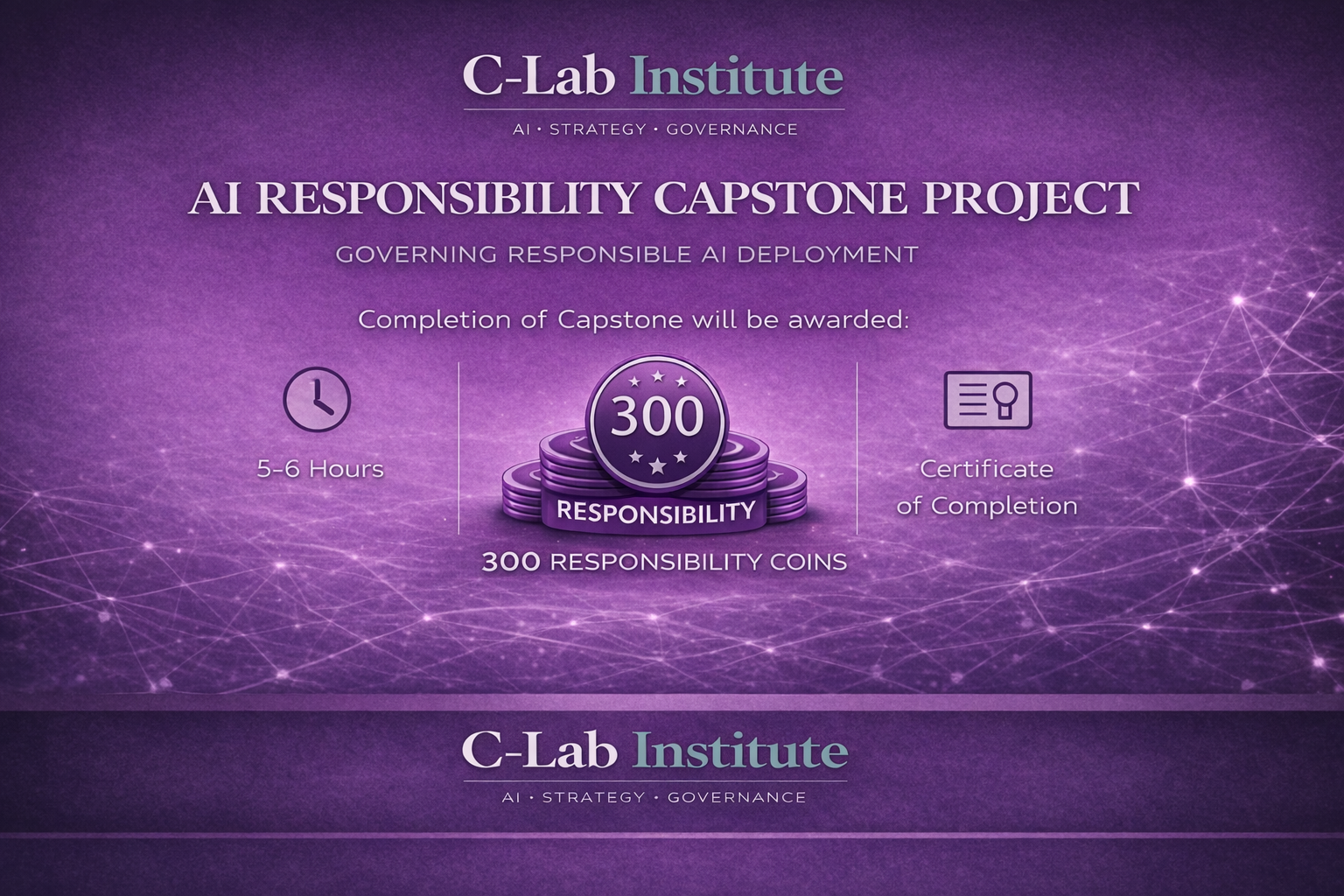
🏅 300 Responsibility Coins
📜 C-Lab Institute AI Responsibility Capstone Certificate
Primary 3R Dimension: Responsibility (Do)
Progression Path: Leader → Fellow
Artificial Intelligence in the public sector carries consequences far beyond operational efficiency — it shapes citizens’ rights, trust, and democratic legitimacy.
This capstone is the culminating stage of the C-Lab Institute AI Responsibility pathway. Participants are placed in a high-stakes government decision scenario involving the deployment of an AI system for public welfare eligibility assessment.
Under political, legal, and societal pressure, leaders must determine whether the system should proceed, pause, or be redesigned.
This is not a theoretical exercise.
It is a governance decision under scrutiny.
