Text size
Line height
Text spacing
Earn a certification that opens doors. Enrol the moment you decide — no admissions process, no cohort wait. Learn at your own pace, finish on your own schedule, and walk away with a verifiable on-chain certificate via ClairPass: shareable to LinkedIn in one click, recognised globally, impossible to fake.
Artificial Intelligence in healthcare does not merely optimise processes — it directly influences diagnoses, treatment decisions, patient safety, and institutional trust.
This capstone is the culminating stage of the C-Lab Institute AI Responsibility pathway. Participants step into the role of senior leadership at Meridian Health Network, a nationally recognised hospital group facing a pivotal decision: whether to deploy an AI-powered diagnostic triage system in its emergency departments
The AI system promises:
However, pilot findings and stakeholder review raise serious concerns:
The board must determine whether to:
This is not a technical optimisation exercise.
It is a governance decision under clinical, ethical, regulatory, and reputational pressure — where patient lives are directly affected.
Participants will act as Chair of the AI Risk & Governance Committee and prepare a formal Board Memorandum advising Meridian Health Network on a responsible course of action.
The capstone evaluates the leader’s ability to:
• Identify clinical safety and equity risks
• Assess disparities in system performance
• Evaluate regulatory and legal exposure (HIPAA, GDPR, cross-border data issues)
• Address explainability and transparency limitations
• Design governance safeguards and oversight structures
• Recommend a defensible deployment decision
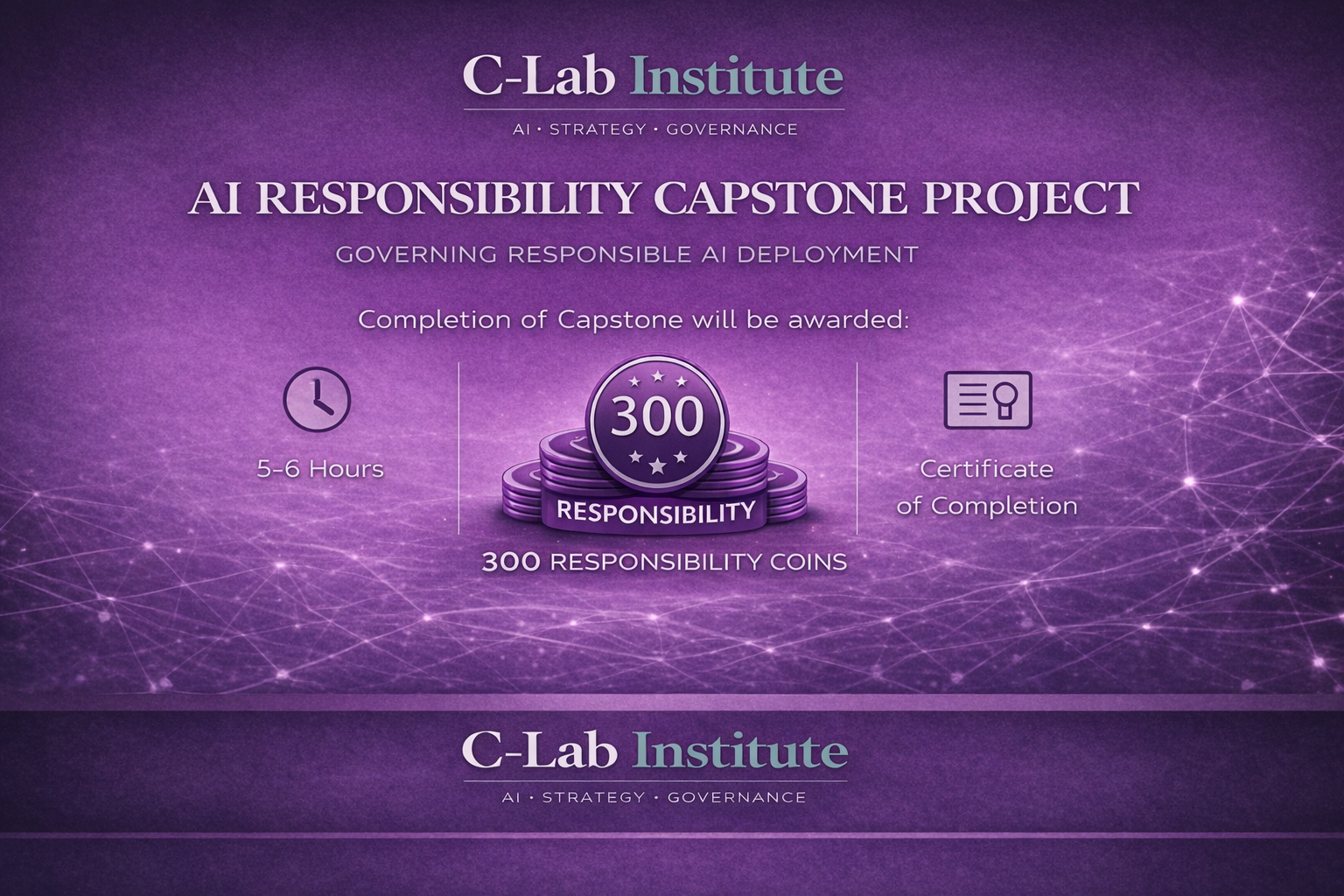
🏅 300 Responsibility Coins
📜 C-Lab Institute AI Responsibility Capstone Certificate
Primary 3R Dimension: Responsibility (Do)
Progression Path: Leader → Fellow
Artificial Intelligence in healthcare does not merely optimise processes — it directly influences diagnoses, treatment decisions, patient safety, and institutional trust.
This capstone is the culminating stage of the C-Lab Institute AI Responsibility pathway. Participants step into the role of senior leadership at Meridian Health Network, a nationally recognised hospital group facing a pivotal decision: whether to deploy an AI-powered diagnostic triage system in its emergency departments
The AI system promises:
However, pilot findings and stakeholder review raise serious concerns:
The board must determine whether to:
This is not a technical optimisation exercise.
It is a governance decision under clinical, ethical, regulatory, and reputational pressure — where patient lives are directly affected.
